Blog
CATEGORY: Best practicePublic SectorAutomation
Using COM-B for email campaigns that drive behaviour change
Public sector communicators are often tasked with achieving big outcomes on tight budgets—whether that’s helping people stop smoking, increasing vaccine uptake, or encouraging recycling. Behaviour change is central to these goals, but success hinges on more than just raising awareness.
That’s where the COM-B model comes in.
Developed by behavioural scientists to provide a clear framework for influencing behaviour, COM-B can also serve as a powerful foundation for designing automated email campaigns. In this post, we’ll break down the COM-B model and walk through how you can apply it step by step in your next campaign.
What is the COM-B model?
COM-B stands for Capability, Opportunity, and Motivation—the three essential conditions for behaviour change:
Capability: Does the person have the physical and psychological ability to perform the behaviour?
Opportunity: Does their environment support or hinder the behaviour?
Motivation: Do they have the desire or impulse to act, either consciously or automatically?
If one of these three factors is missing, the change in behaviour is unlikely to occur.
Let’s say you're running a campaign to encourage more parents to walk their children to school:
If a parent doesn't know the safest route (Capability),
if there’s no safe pavement (Opportunity),
if they don’t believe it’s worth the effort (Motivation),
…the behaviour change won’t happen.
Why use COM-B for email automation?
Email is one of the most effective and low-cost channels for influencing behaviour over time. But many campaigns fail to move the needle because they don’t address the actual barriers people face.
By using COM-B to structure your email automation, you can ensure your messages are:
Targeted
Behaviourally informed
Sequenced for maximum impact
Step-by-Step: How to build a COM-B-informed email campaign
Let’s walk through how to apply COM-B to a behaviour change campaign—say, getting people to register for a free home energy advice service.
1. Define the target behaviour clearly
Be specific, use a SMART objective: “Register for a home energy advice session via our online form within the next month.”
2. Identify COM-B barriers through research
Use surveys, past campaign data, or insights from your team to map likely barriers:
Capability: People may not know what the service offers or if they qualify.
Opportunity: They might be unaware the service exists, or find the website hard to navigate.
Motivation: They may not see the value or feel overwhelmed by the idea of change.
3. Structure your campaign using COM-B
Structure your email automation into phases:
Phase 1: Build psychological capability
Email 1: “What is a home energy advice session?”
Clear explanation of the service, who it’s for, and how it works. Use plain English and visuals.
Email 2: “Who’s eligible and how to book”
Address misconceptions and make the process feel simple.
Phase 2: Improve opportunity
Email 3: “Here’s how easy it is to book”
Include a step-by-step guide with screenshots. Highlight that sessions can be done remotely or during flexible hours.
Email 4: “Support is available if you need help”
Include a helpline or local partner who can assist. Reduce friction.
Phase 3: Boost motivation
Email 5: “How one household saved £400 a year”
Share a real story. Use social proof.
Email 6: “Top 3 reasons people love this service”
Use testimonials, emotional appeals, and reinforce identity (“Smart homeowners are making the switch…”).
Phase 4: Prompt action
Email 7: “Spots are filling up—book now”
Add urgency with a gentle nudge.
Email 8: “Last chance to book your free advice session”
A final call to action with bold design and a clear button.
Tips for success
Automate based on behaviour, not just time: Use triggers like “clicked but didn’t book” to send follow-ups that tackle specific drop-off points.
Keep emails short and skimmable: Use bullet points, bold text, and a clear CTA in every message.
Test and tweak: A/B test subject lines, CTA placement, or testimonial types to refine impact.
Stay human: Use conversational tone and sender names. People are more likely to respond to a person than a department.
Final thoughts
Public sector communicators play a vital role in creating healthier, greener, and more equitable communities. By grounding your email campaigns in the COM-B model, you can make behaviour change more likely—and your work more impactful.
Start small. Pick one campaign, map it to COM-B, and measure results.
You may also like these blogs
Building successful behavioural change campaigns
October 18th, 2022 - Sadie Burgess
Many government communications seek to change behaviours in order to implement government policy or improve society.The objective of most behaviour...
Best practice Automation Public Sector
Nudging toward Healthier Choices
October 4th, 2024 - Harry Thomas
In the world of public health communications, influencing behaviour is critical for successful campaigns. Whether you're encouraging healthier...
Automating a great first impression
October 26th, 2023 - Harry Thomas
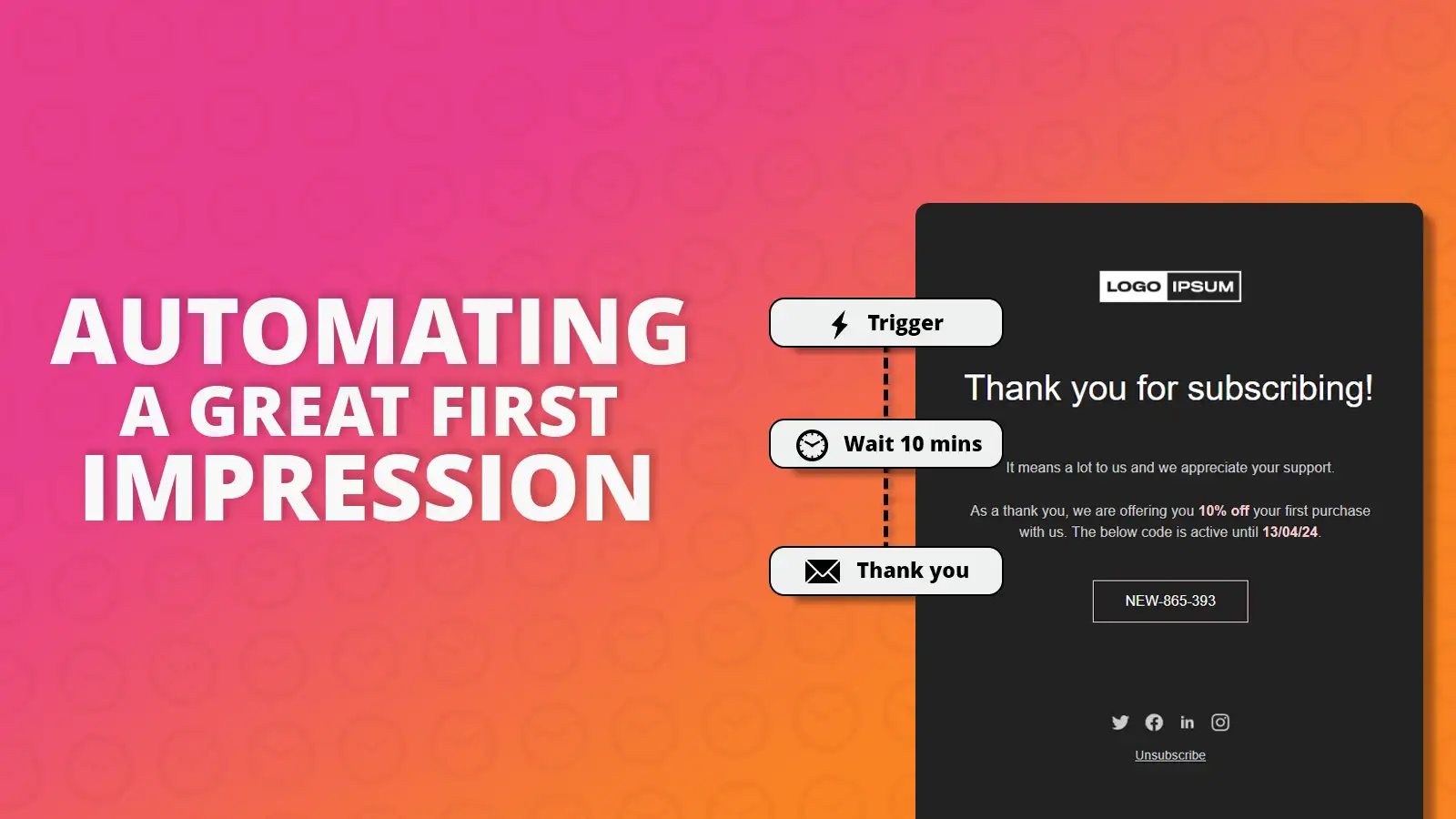
In the world of digital communication, first impressions matter just as much as they do in face-to-face interactions. When someone signs up to your...
Solutions

Email Marketing
Create email campaigns and newsletters and manage end-to-end subscription processes with forms and preferences.

Marketing Automation
Create sophisticated automated campaigns for email and SMS combined.

Digital Communication
The comprehensive solution to manage and automate your digital communication across email, SMS, websites and landing pages.

Email marketing healthcheck
We are confident that we can help you, which is why we offer a free healthcheck to identify potential issues with your current programme and free advice on things that could be done to improve it.