Blog
CATEGORY: Best practiceAutomationPublic Sector
Nudging toward Healthier Choices
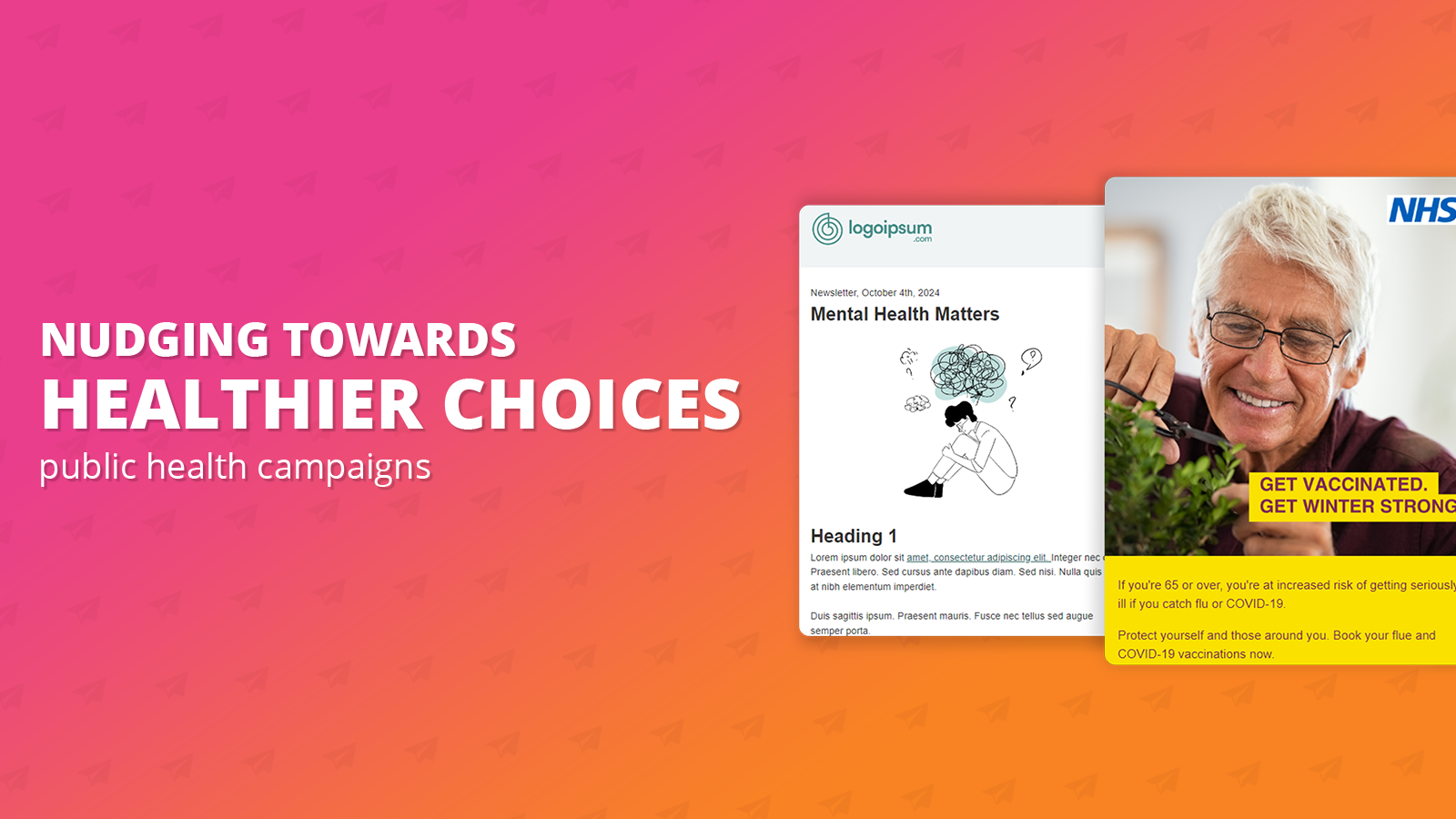
In the world of public health communications, influencing behaviour is critical for successful campaigns. Whether you're encouraging healthier eating habits, promoting vaccination programs, or raising awareness about mental health, the challenge is getting people to take action. Email marketing, when paired with behavioural psychology, offers a powerful way to nudge individuals toward healthier choices.
By incorporating nudge techniques and gamification and leveraging Robert Cialdini’s principles of persuasion, public health professionals can design emails that go beyond informing—they can drive real behaviour change. In this post, we’ll explore how these strategies can support public health goals, from increasing program participation to encouraging long-term health improvements.
The Role of Nudge Theory in Public Health
Nudge theory, popularized by Richard Thaler and Cass Sunstein, is about making small interventions that guide people toward healthier decisions without restricting their freedom of choice. In public health, nudges can help overcome inertia or indecision, making it easier for people to take positive action. Gamification takes this concept a step further by making health behaviours more engaging and rewarding.
Gamification involves applying game-design elements—like points, rewards, leader boards, or challenges—to non-game settings, such as health promotion. It taps into human psychology by providing immediate feedback, rewarding progress, and fostering a sense of achievement, making it a powerful tool to support nudge techniques in public health email campaigns.
Cialdini’s six principles of persuasion—reciprocity, scarcity, authority, consistency, liking, and social proof—can be used strategically in email campaigns to encourage public health behaviours. Here’s how these principles can be adapted to your health initiatives.
1. Reciprocity: Foster Positive Engagement
In public health, building trust with your audience is essential. The principle of reciprocity works by offering value first, creating a sense of obligation to respond or take action. This could mean sharing valuable resources or offering something beneficial that motivates the recipient to reciprocate with positive health behaviours. Gamification can enhance this by adding rewards for participation or achievements.
Example: Offer free health toolkits, wellness tips, or downloadable guides in your emails. For instance, if promoting a smoking cessation program, you could provide a free guide on how to quit smoking, paired with an invitation to attend a free virtual support group. You could include gamified elements like progress badges or points for opening emails or completing health-related actions. If promoting a fitness program, you could allow users to earn points for tracking workouts, which can later be redeemed for rewards or recognition.
Tip: Make sure the content feels tailored to the recipient’s needs, increasing the likelihood that they’ll take action in return—whether that’s signing up for a program or adopting healthier habits.
2. Scarcity: Creating Urgency for Health Initiatives
In public health campaigns, urgency can be a powerful motivator for action. Cialdini’s principle of scarcity highlights how people are more likely to act when they believe an opportunity is limited or rare.
Example: Use time-sensitive messaging like “Limited spots available for our free wellness workshop” or “Last chance to get a free flu shot at your local clinic.” Scarcity prompts immediate action, which is crucial when encouraging participation in health screenings, vaccinations, or time-bound initiatives.
Tip: Ensure your urgency is authentic. Transparency builds trust, while fake scarcity can damage the credibility of your public health efforts.
3. Social Proof: Showing Collective Action for Health
People often look to others to validate their choices, which makes social proof an essential element in public health campaigns. When people see that their peers, neighbours, or community members are adopting healthier behaviours, they are more likely to do the same.
Example: Highlight the success stories of individuals who have benefited from your health programs or share testimonials from participants. Show stats like “90% of residents in your community have received their flu jab,” or use endorsements from respected community leaders to reinforce healthy behaviours.
Tip: Use visuals to amplify social proof. Include photos or short videos of people engaging in the health behaviour you're promoting, whether it’s attending fitness classes, participating in health challenges, or getting vaccinated.
4. Authority: Trusting Health Experts
Public health campaigns are often most effective when backed by credible sources. Cialdini’s authority principle suggests that people are more likely to follow advice from experts or trusted figures.
Example: Include endorsements from medical professionals, public health officials, or respected organizations. Reference authoritative data, studies, or guidelines to reinforce the importance of your message, such as “The CDC recommends getting vaccinated before flu season” or “Hear from Dr. Smith, our lead health expert, on the benefits of regular exercise.”
Tip: Pair authoritative information with practical tips. People are more likely to follow expert advice when it’s paired with actionable steps they can take immediately.
5. Consistency: Building Momentum with Small Steps
The principle of consistency states that people are more likely to continue a behaviour once they’ve made an initial commitment. In public health, you can encourage small, manageable steps toward healthier behaviour, which will lead to bigger changes over time. Gamification can help maintain this momentum by rewarding small steps toward better health.
Example: Start by asking your audience to take a simple action—like completing a brief health quiz or signing up for a weekly wellness newsletter. After that, follow up with emails that encourage participation in health programs, screenings, or workshops, gradually building engagement over time.
Tip: Frame your requests in a way that emphasizes how these small actions are part of a larger, long-term health goal, reinforcing the idea of staying committed to personal health.
Ensure the gamification is progressive. Start with small, easy-to-complete tasks, and gradually increase the complexity as recipients build confidence and momentum in their health behaviours.
6. Liking: Creating a Connection with Your Audience
People are more likely to follow guidance from organizations they feel connected to or ‘like’. Establishing this likability in your public health emails can create a stronger connection with your audience.
Example: Use personal, relatable language in your emails and highlight the community-driven aspect of your health campaigns. Showcase local stories, community health successes, or collaborative initiatives to create a sense of belonging.
Tip: Share stories that resonate with your audience’s values and experiences. For example, during a mental health awareness campaign, you might share testimonials from community members who’ve benefited from your services, helping recipients feel more connected to the cause.
Changing health behaviours is often challenging, but by combining email marketing with behavioural psychology and gamification, public health professionals can significantly increase engagement and inspire long-term change. Using Cialdini’s six principles of persuasion—reciprocity, scarcity, authority, consistency, liking, and social proof—together with gamification, allows you to create email campaigns that not only inform but also motivate and reward healthier actions.
Gamification taps into our natural desire for achievement and progress, making health initiatives more interactive and enjoyable. When applied thoughtfully, alongside behavioural psychology, it becomes a powerful tool for driving the health outcomes your public health campaigns aim to achieve.
You may also like these blogs
Building successful behavioural change campaigns
October 18th, 2022 - Sadie Burgess
Many government communications seek to change behaviours in order to implement government policy or improve society.The objective of most behaviour...
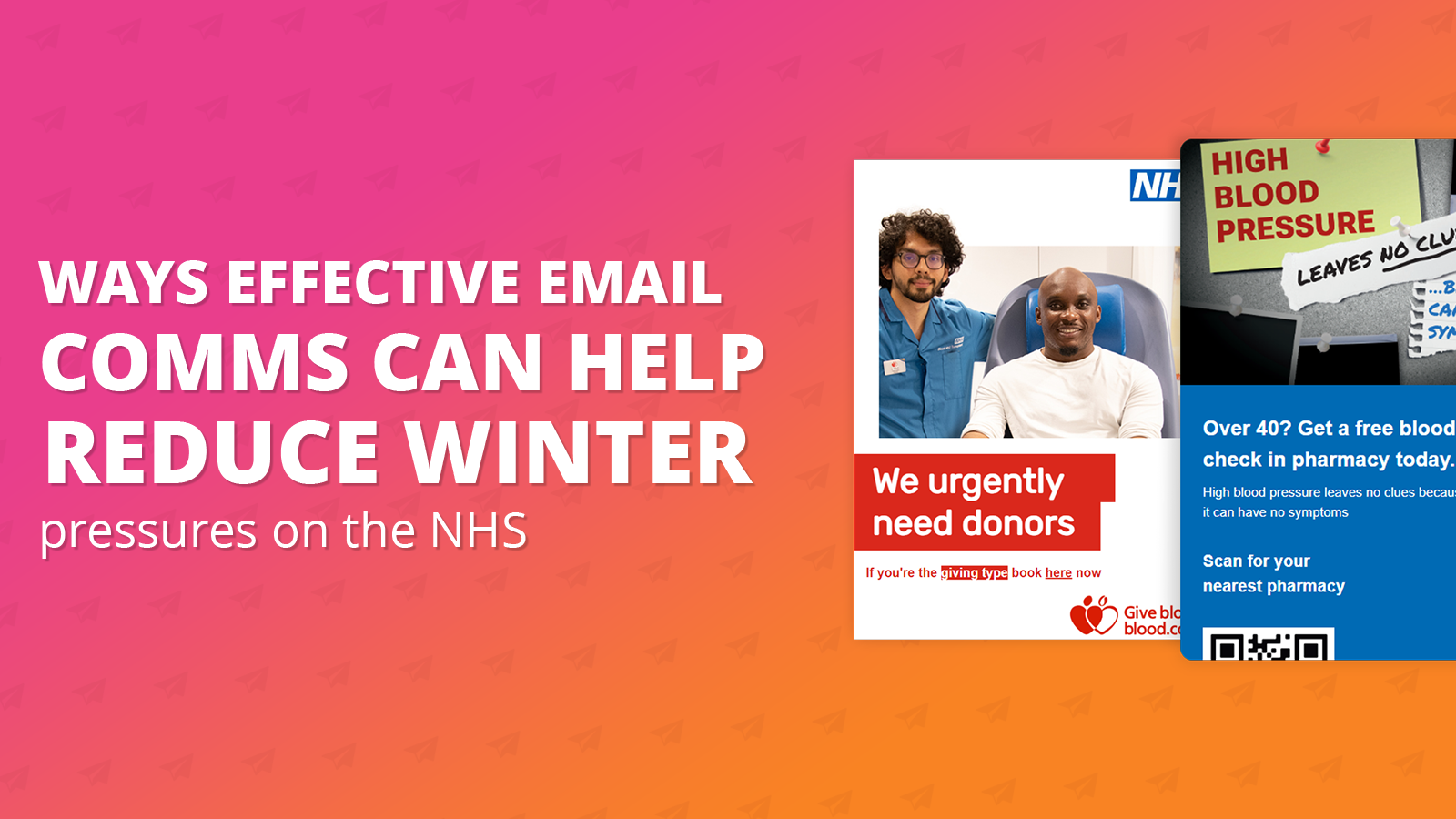
Ways effective email comms can help reduce winter pressures on NHS
September 26th, 2024 - Harry Thomas
In the winter months, many health conditions such as respiratory diseases e.g. asthma, can be caused or worsened by cold weather. This combined...
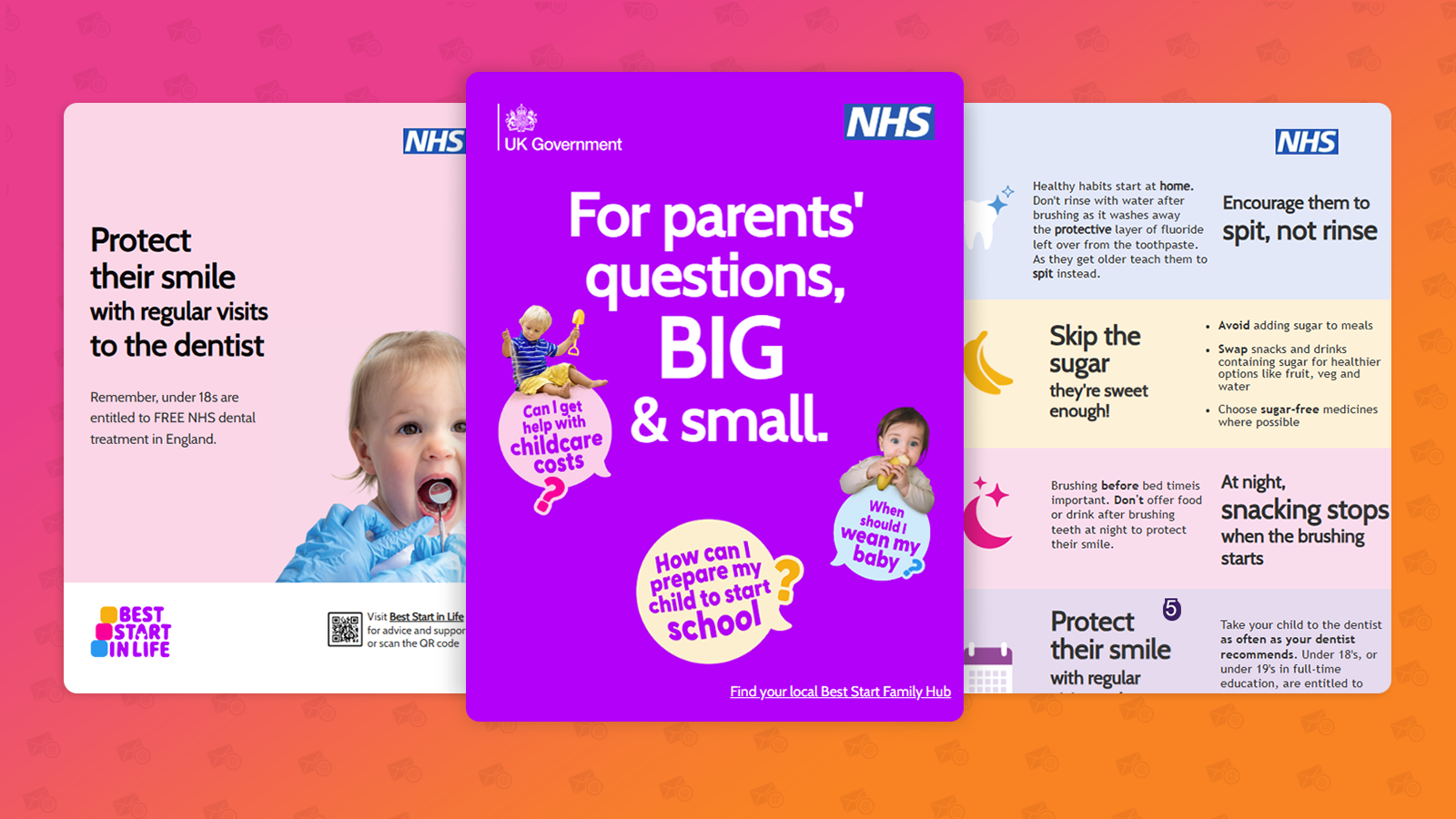
Email Library Template showcase
Email Library Campaign: Best Start in Life
April 7th, 2026 - Harry Thomas
Best Start in Life brings together all services, offers and support available to help guide and support parents from pregnancy, through their...
Solutions
Email Marketing
Create email campaigns and newsletters and manage end-to-end subscription processes with forms and preferences.

Marketing Automation
Create sophisticated automated campaigns for email and SMS combined.
Digital Communication
The comprehensive solution to manage and automate your digital communication across email, SMS, websites and landing pages.

Email marketing healthcheck
We are confident that we can help you, which is why we offer a free healthcheck to identify potential issues with your current programme and free advice on things that could be done to improve it.