Blog
CATEGORY: Public Sector
How Local Authorities use storytelling and email to drive real-world change
.png)
In the ever-crowded world of public sector communications, facts alone aren’t enough to capture attention—especially when you’re competing with the 24-hour news cycle, the TikTok algorithm, and the never-ending scroll of social media. For local authority communications teams, the key to cutting through the noise isn’t just information. It’s storytelling.
Why Storytelling Matters in Local Authority Comms
At its heart, storytelling is a human instinct. We’re wired to pay attention to narratives: to characters we can relate to, challenges we recognise, and journeys that feel real. For local authorities, this isn’t just a “nice-to-have” communications technique. It’s a strategic tool that builds trust, changes behaviour, and helps communities see the real-world value of council services.
Here’s why storytelling works:
1. It makes abstract services relatable
Waste collection, public health, housing advice—these can feel faceless or bureaucratic from the outside. But tell the story of a family kept in safe accommodation over Christmas, or a smoker who quit thanks to a council-run support group, and suddenly your audience connects emotionally. Storytelling puts real people into the picture.
2. It builds trust and transparency
When residents hear first-hand accounts of how the council responded to flooding, rolled out a food hub, or supported someone back into work, you move beyond generic press releases. You demonstrate accountability. You show the “how” behind the headlines.
3. It changes behaviour
Behavioural science tells us people are more likely to act when they see others “like them” doing the same. A well-told story about a neighbour who’s switched to active travel or signed up for energy-saving schemes is far more persuasive than a list of bullet points.
Email Series: A Smart Channel for Storytelling
So where does email come in? While social media often gets the spotlight, email offers something different—and uniquely powerful—for telling stories.
1. Email is personal and direct
Landing in someone’s inbox creates a 1:1 connection. Unlike social media posts that disappear in seconds, emails feel more intentional. That’s gold dust when you're trying to build a narrative over time.
2. You can build a journey
A single email can tell a story. But a series of emails? That’s where things get interesting. You can introduce a character or theme, build a sense of progress, and reinforce key messages gradually—just like a good TV series keeps viewers coming back.
Example: A public health team might create a 4-week email series following “Maria”, a local resident trying to improve her mental wellbeing. Each email could cover a different step in her journey—reaching out for help, trying mindfulness, joining a support group—with links to services at each stage.
3. It supports segmentation and personalisation
Not every resident needs the same message at the same time. Email allows you to tailor stories to different audiences—parents, older adults, people living with long-term conditions—and guide them toward action that’s relevant to them.
4. You can measure what works
Open rates, click-throughs, engagement over time: with email, you get real data on what stories are landing well—and which calls to action are driving behaviour change.
Final Thought: Storytelling Isn’t Soft—It’s Strategic
For local authority communications teams under pressure to show impact and change behaviours, storytelling isn’t fluff. It’s a powerful, evidence-based tool to build understanding, empathy, and trust—and email is one of the best ways to deliver it at scale.
By pairing real resident voices with thoughtful, structured email campaigns, councils can move beyond information delivery—and into genuine community connection.
Storytelling in action
Surrey County Council's Head of Brand and Marketing, Richard Neale, joined James Morton of Turn the Page to talk about how a storytelling approach to their email engagement led to a 979% increase in their subscribers in one year.
Their amazing impact won them the Unaward for Best Use of Email last year and Darren Caveney, UnAwards creator from comms2point0, will also join us to explain how to enter this year's UnAwards and what judges are looking for.
You may also like these blogs
Social media Best practice Design
Social Share – how to grow your email audiences organically
April 17th, 2026 - Harry Thomas
Social sharing is a way of building communities and driving engagement online, allowing you to reach wider audiences organically. Social sharing...
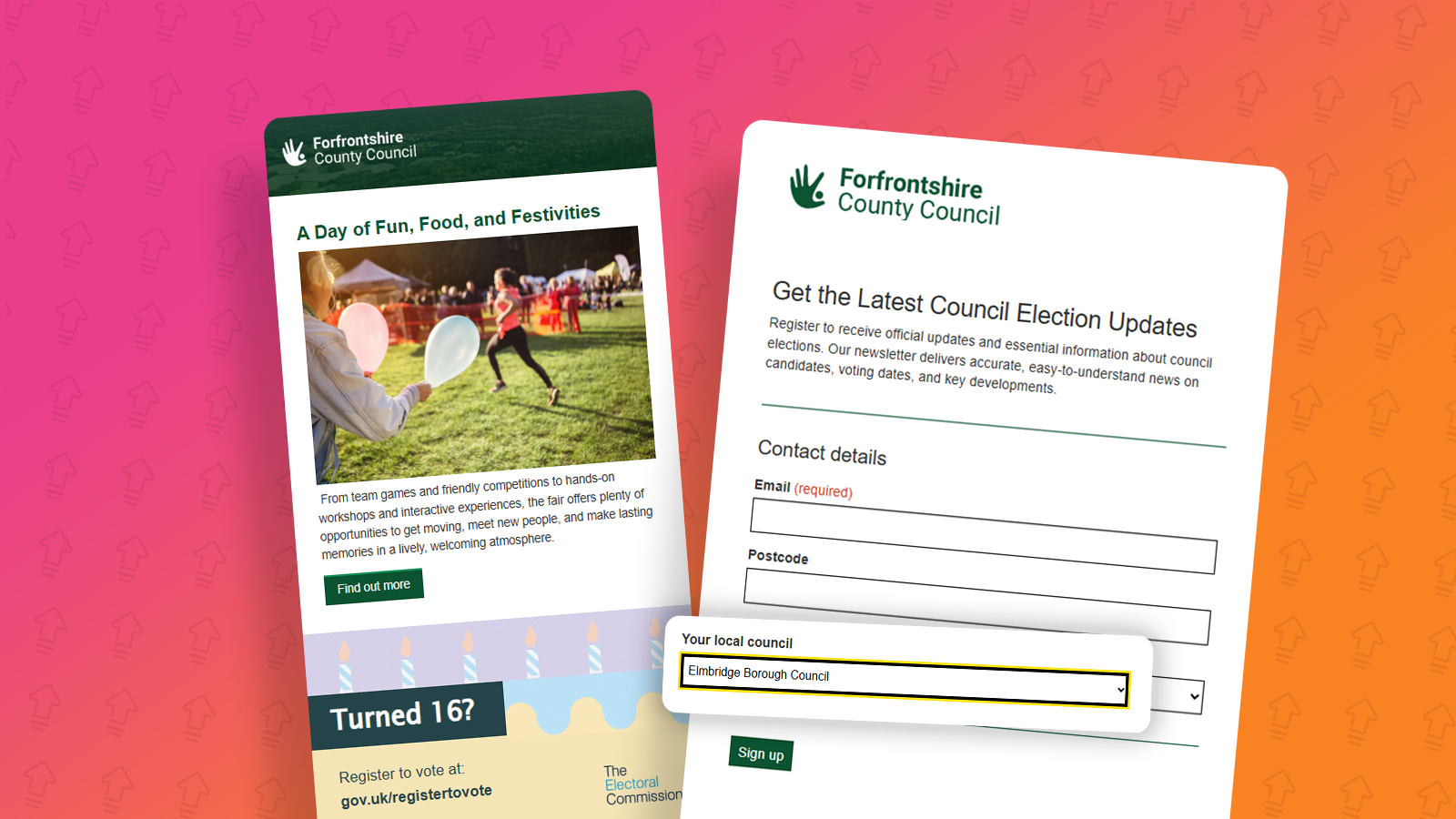
5 ways email can be used to promote local elections
February 16th, 2026 - Harry Thomas
Local elections suffer without direct contact. During campaigns, crucial information doesn’t reach the right people, confusion grows, and turnout...
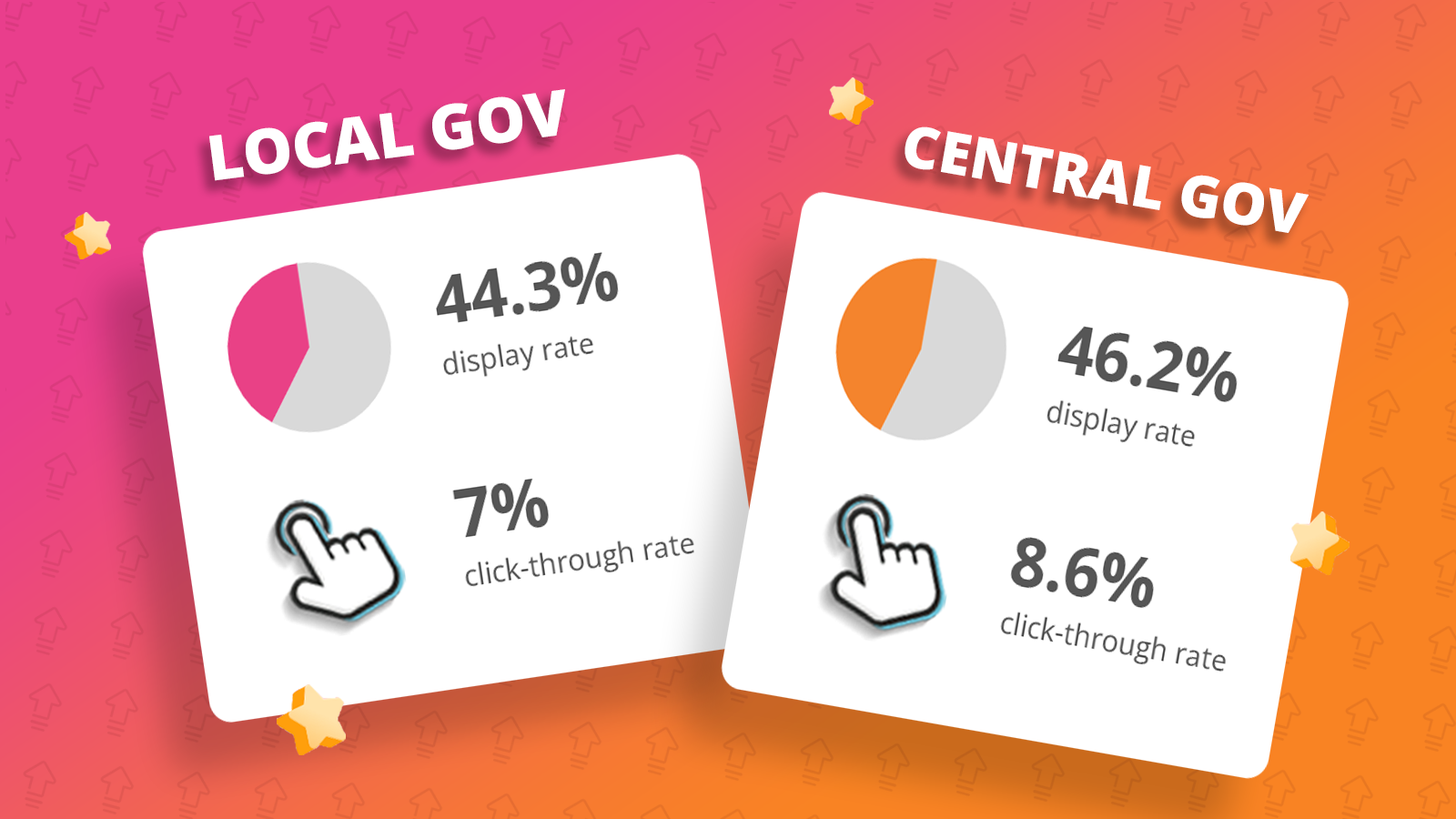
Public sector email benchmarks for 2026
January 5th, 2026 - Harry Thomas
What the data from 300 million public sector emails sent last year shows us (and what it doesn’t) This report summarises the 2025 performance over...
Solutions
Email Marketing
Create email campaigns and newsletters and manage end-to-end subscription processes with forms and preferences.
Marketing Automation
Create sophisticated automated campaigns for email and SMS combined.
Digital Communication
The comprehensive solution to manage and automate your digital communication across email, SMS, websites and landing pages.

Email marketing healthcheck
We are confident that we can help you, which is why we offer a free healthcheck to identify potential issues with your current programme and free advice on things that could be done to improve it.