Blog
CATEGORY: Public Sector
5 ways email can be used to promote local elections
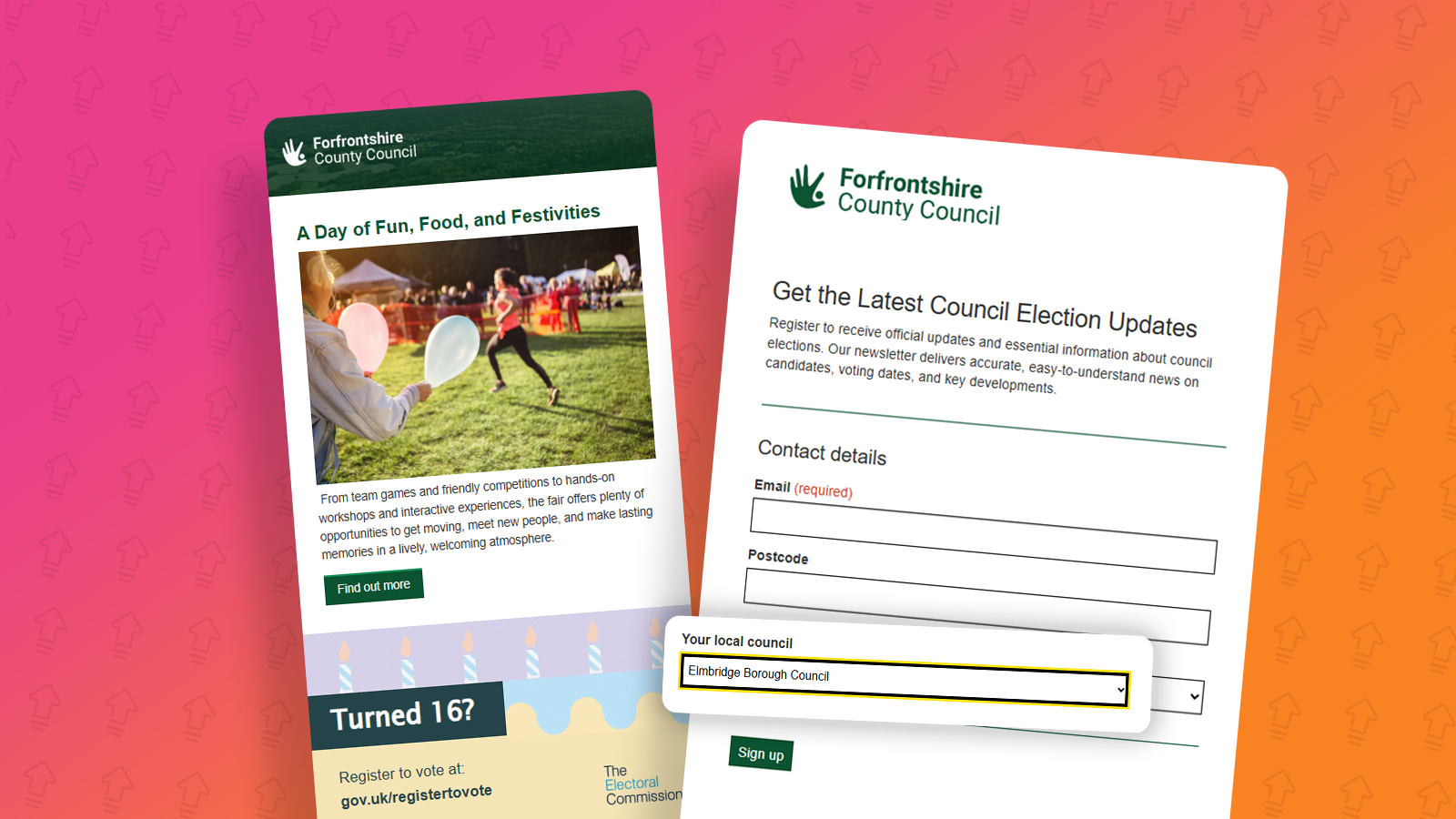
Local elections suffer without direct contact. During campaigns, crucial information doesn’t reach the right people, confusion grows, and turnout can suffer as a result. Email cuts through this noise. It’s direct, familiar, and trusted - and when it’s delivered through a platform like e-shot, it becomes a practical, measurable way to inform residents and drive participation.
Here are five clear, actionable ways where email can jumpstart your local election engagement:
1. Using e-shot modules – turn content into reusable power tools
Campaigns move fast; election deadlines don’t wait. Modules let you build once and reuse everywhere, turning email content into a toolkit.
With e-shot modules, you can:
Drop in a “Register to Vote” block that works in every email without a design overhaul
Highlight polling stations or ballot deadlines with ready-to-go modules
Embed surveys or quick polls to gauge resident priorities instantly
Modules save time and reinforce brand guidelines. Instead of rebuilding every email, teams can focus on reaching residents with the right content, at the right time, every time.
This leads to faster deployment, fewer mistakes, and a more professional, trustworthy campaign presence.
2. Automating campaigns – stay ahead of deadlines
Election communication is time sensitive. e-shot's automated series campaign lets you schedule sequences of emails well in advance, so you never miss critical data.
Use automation to:
Send registration reminders on key cut-off dates
Trigger follow-up emails to unengaged contacts
Schedule polling day notifications
Automation ensures your campaign stays consistent, timely and credible.
3. Track and optimise – act on real insight
Email isn’t just a broadcast — it’s feedback in real time. e-shot’s analytics and reporting show you what works and what doesn’t.
For election campaigns, this lets you:
See which links and calls to action drive clicks using our click overlay and link statistics
Send the right content for different wards or age groups
Adjust content, timing, or CTAs mid-campaign to improve results
Compare two different approaches using our Split (A/B) testing campaign
You can move from guessing to making data-driven decisions that increase turnout.
4. Cross-promotion - amplify your reach
Campaigns that link email to other channels, services, or partner organisations get far better results. Use e-shot campaigns to reinforce and amplify activity happening across your organisation and local community.
With e-shot, you can cross-promote effectively:
Include links to social media pages or official council websites for more election resources
Use our social share feature to encourage people to easily send campaigns to others
Partner with local libraries, community centres, or schools to share consistent messages via email, events, or newsletters
Cross-promotion keeps residents informed across multiple touchpoints, reinforces key messages, and drives action — whether that’s registering, voting, or attending local events.
5. Use storytelling to emphasise civic impact
Facts and dates are important, but stories are what truly capture attention and inspire action. Email provides a space to connect local elections to real-life outcomes by showing readers how voting directly influences the places and services they use every day.
For example, rather than simply stating that councils make budget decisions, an email could highlight:
How past elections led to the renovation of a local park
Improved public transport routes
Increased funding for schools.
To conclude
All the above are tangible examples that help residents see that their vote has consequences beyond the ballot box.
Personal stories can be especially powerful. Consider featuring a short narrative about a resident whose quality of life improved because of a council initiative, or a community group that benefited from local funding. These human-centred messages create an emotional connection and make the election feel relevant rather than procedural.
However, it’s important to maintain a balanced and informative tone, particularly for official or nonpartisan communications. The goal is to encourage participation by demonstrating impact, not to advocate for a specific candidate or outcome.
Finally, keep storytelling concise. A brief but vivid example paired with a clear reminder about when and how to vote ensures the message remains engaging while still driving the reader toward action.
You may also like these blogs
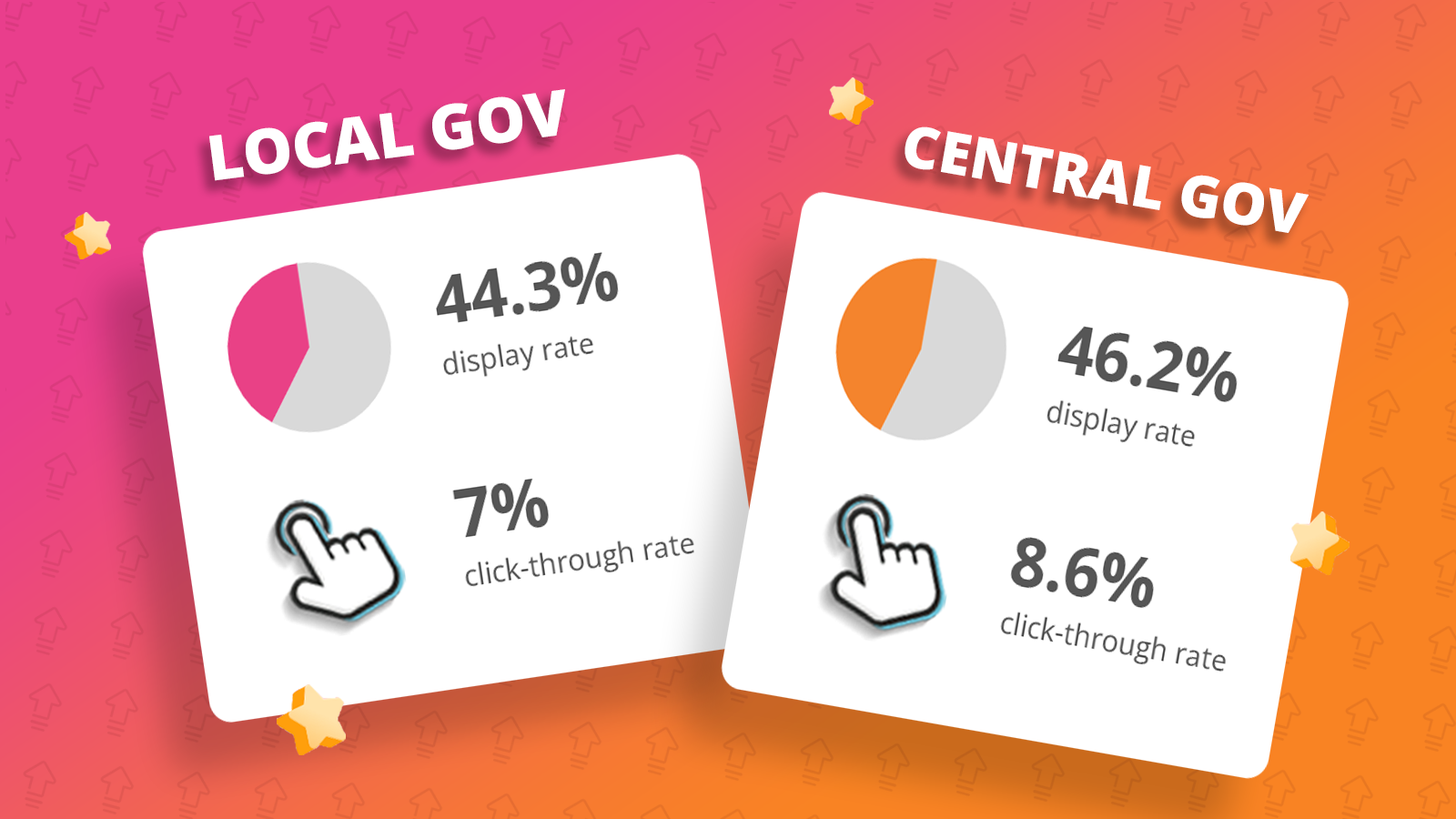
Public sector email benchmarks for 2026
January 5th, 2026 - Harry Thomas
What the data from 300 million public sector emails sent last year shows us (and what it doesn’t) This report summarises the 2025 performance over...
.png)
How Local Authorities use storytelling and email to drive real-world change
November 4th, 2025 - Harry Thomas
In the ever-crowded world of public sector communications, facts alone aren’t enough to capture attention—especially when you’re competing with the...
Solutions
Email Marketing
Create email campaigns and newsletters and manage end-to-end subscription processes with forms and preferences.

Marketing Automation
Create sophisticated automated campaigns for email and SMS combined.

Digital Communication
The comprehensive solution to manage and automate your digital communication across email, SMS, websites and landing pages.

Email marketing healthcheck
We are confident that we can help you, which is why we offer a free healthcheck to identify potential issues with your current programme and free advice on things that could be done to improve it.