Help articles
CATEGORY: Campaigns
Sending a re-engagement campaign
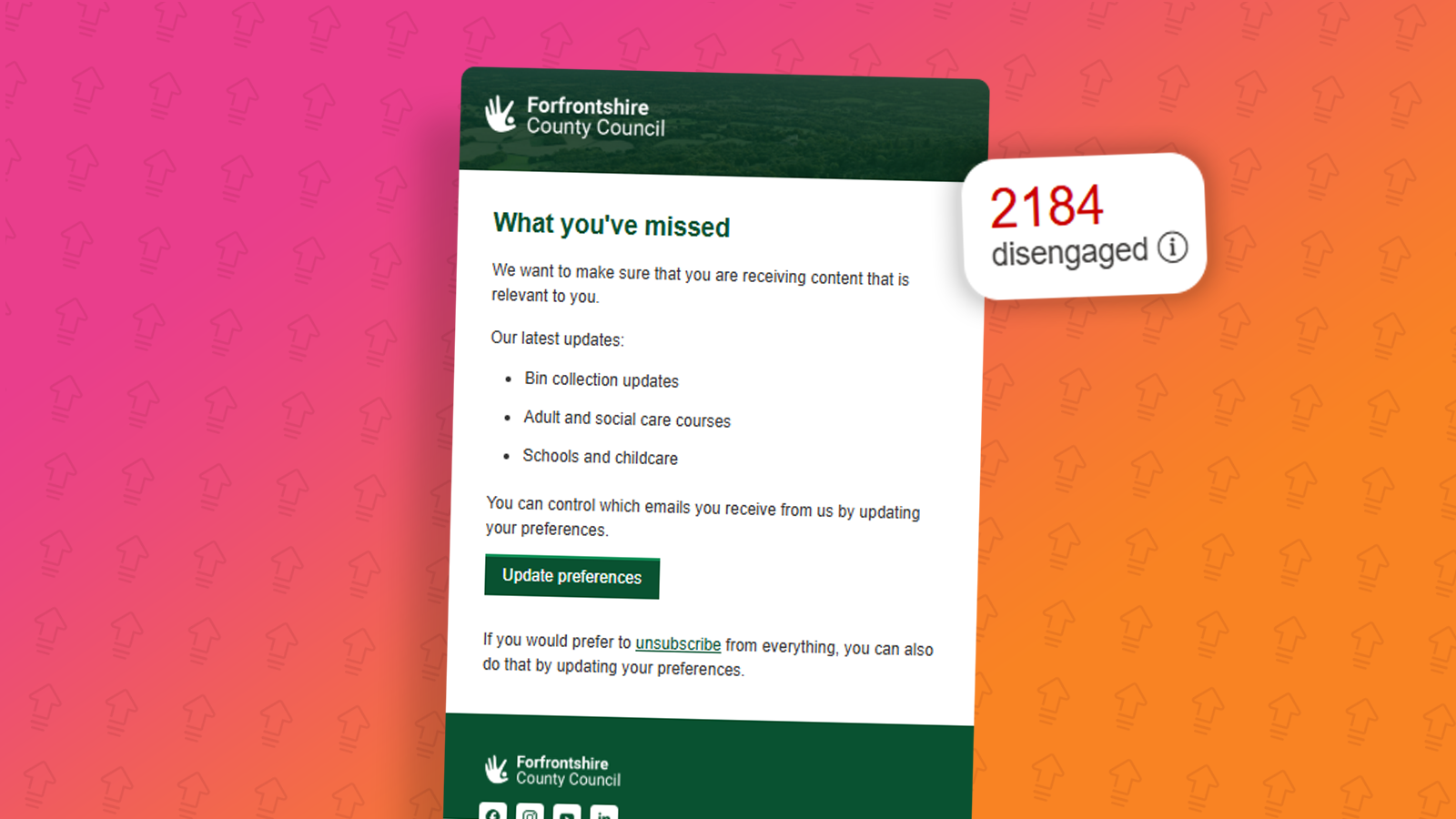
Over time, every email list accumulates subscribers who stop opening/displaying, clicking, or engaging with your messages. While it might be tempting to keep emailing everyone, sending to disengaged contacts can hurt deliverability, reduce overall performance, and make it harder for your most interested subscribers to see your emails.
A re-engagement (or disengagement) campaign helps you identify who still wants to hear from you and who should be removed or suppressed from future sends. By giving inactive contacts, a clear opportunity to show their still interested, wish to update their Preference subscription topics or unsubscribe, you protect your sender reputation, improve engagement metrics, and keep your list healthy and intentional.
In this guide, we’ll cover what to do before launching a re-engagement campaign, what to include in the emails themselves, and the key steps to take after the campaign to manage subscribers who remain inactive. Whether you’re running one small newsletter or multiple larger newsletters, these best practices will help you maintain a cleaner list and stronger long-term email performance.
Prepare before you send
Define what “Disengaged” Means for you
Start by clearly defining inactivity. In e-shot we class a disengaged contact as someone who has not interacted (opened/displayed or clicked) one of your emails in over 6 months.
From the CRM page in e-shot you can easily access those disengaged contacts.
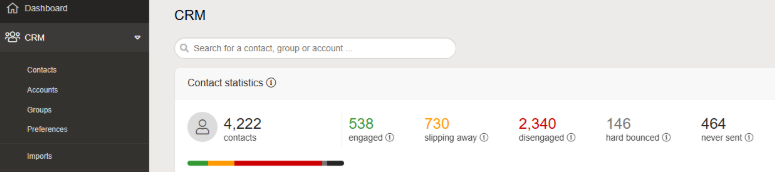
Sending your re-engagement to those contacts is a pretty safe bet, but you may wish to judge disengagement differently, maybe its a contact who hasn't opened/displayed or clicked for over a year.
1. Review deliverability health
Inactive segments can be risky to email. Before launching:
Review recent display and click rates
Check bounce and complaint rates
Confirm your domain reputation is stable
Mailbox providers such as Gmail and Yahoo Mail monitor engagement signals closely. Large sends to disengaged audiences can impact inbox placement if your overall engagement is already declining.
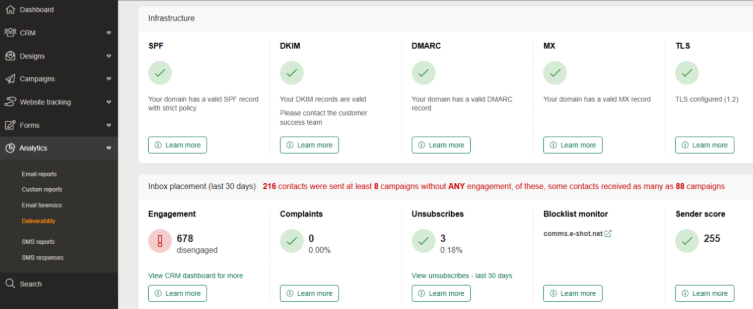
From the deliverability dashboard in e-shot, you can easily see if everything is configured correctly as well as how many recent disengaged contacts, complaints and unsubscribes you have had.
2. Set clear success criteria
Define your goal in advance:
What counts as re-engagement? (display or click)
How many emails will you send? (one message or a 2–3 email series?)
How long will you wait before suppressing non-engagers?
Having this defined ahead of time prevents hesitation later.
Build an effective re-engagement campaign
Your campaign should feel helpful, respectful, and easy to act on.
1. Use clear subject lines
Clarity performs better than cleverness. Examples:
“Still want to hear from us?”
“Do you still want these emails?”
“Confirm your subscription”
The goal is simple: get subscribers to signal interest.
2. Include one clear primary call-to-action in your email
Avoid clutter. Choose one main action:
“Yes, keep me subscribed”
“Update my preferences”
“See what’s new”
3. Offer the option to opt out
Some subscribers that are disengaged simply may no longer be interested. In this case it is better they unsubscribe then you continuously sending to them.
Just the like the above, ensure a clear call to action is provided to opt out. This can be in your emails footer unless you wish to make it more prominent for your re-engagement campaign.
Remember, contacts who are no longer interested are best unsubscribed rather than just sitting there.
What to Do After the Campaign
This is where list health is truly protected.
If someone remains disengaged after your campaign, take action!
1. Suppress inactive contacts
Continuing to email people who consistently ignore your messages:
Lowers engagement rates
Signals poor list hygiene
Increases the risk of spam filtering
Increases the risk of being block listed entirely
Suppressing inactive contacts often improves display and click rates almost immediately. Rather than supressing the contacts from your sends, you may wish to manually unsubscribe them full stop, the contact can always opt back in again in the future if they change their mind.
2. Consider a final “Sunset” email
You may wish to send a short final notice:
“We’re going to stop emailing you.”
“This is the last email you’ll receive.”
Keep it brief and respectful. This may recover a small additional percentage of subscribers.
3. Move contacts to a suppression list
Best practice:
Create a dynamic “Inactive – Do Not Send” Group
Automatically exclude it from campaigns by adding that Group to a Saved filter
Ensure the list is reviewed and updated every few months
Again, as mentioned, you may wish to unsubscribe the disengaged contacts entirely, in which case the suppression list is not needed as e-shot will automatically filter out any unsubscribed contacts from your campaign sends.
Avoid deleting contacts immediately unless required for compliance reasons. Suppression preserves historical data while protecting performance.
4. Monitor performance improvements
After removing inactive contacts, track:
Display rate increases
Click-through rate improvements
Reduced spam complaints
Improved inbox placement
A smaller, engaged list consistently outperforms a larger inactive one.
5. Automate the process going forward
Rather than running one-off clean-up campaigns, consider automating through our Automated Series campaign builder.
Automating the process will allow you to:
Trigger re-engagement workflows automatically when someone reaches the disengagement status
Add contacts automatically to your suppression list
Run rolling disengagement campaigns
Set and forget – Although you will still need to monitor, automating removes the need to manually send re-engagement campaigns over and over again
Final Thoughts
Re-engagement campaigns aren’t about shrinking your list — they’re about strengthening it.
By identifying who still wants to hear from you and respectfully removing those who don’t, you:
Protect your sender reputation
Improve performance metrics
Build a more intentional audience
Long-term email success isn’t measured by list size. It’s measured by engagement, trust, and sustained deliverability.
You may also like these articles
Deliverability
Maintaining deliverability to Microsoft contacts
February 26th, 2026 - Harry Thomas
Affected contact addresses: outlook, Hotmail and live.com Since 2025 and increasingly into 2026, Microsoft has fundamentally strengthened how it...
Campaigns CRM Forms and Landing Pages
How to reduce disengagement and increase subscribers
January 5th, 2026 - Harry Thomas
Email is one of the most powerful owned channels, but only when people actually read and engage with your emails. High unsubscribe rates, low open...
Campaigns
Campaigns: Single send campaign
June 11th, 2024 - Harry Thomas
The ‘New single send campaign’ offers the same functionality as the legacy single send campaign but with an improved overall user experience. New...
Solutions

Email Marketing
Create email campaigns and newsletters and manage end-to-end subscription processes with forms and preferences.

Marketing Automation
Create sophisticated automated campaigns for email and SMS combined.

Digital Communication
The comprehensive solution to manage and automate your digital communication across email, SMS, websites and landing pages.

Email marketing healthcheck
We are confident that we can help you, which is why we offer a free healthcheck to identify potential issues with your current programme and free advice on things that could be done to improve it.