Help articles
CATEGORY: CampaignsCRMForms and Landing Pages
How to reduce disengagement and increase subscribers
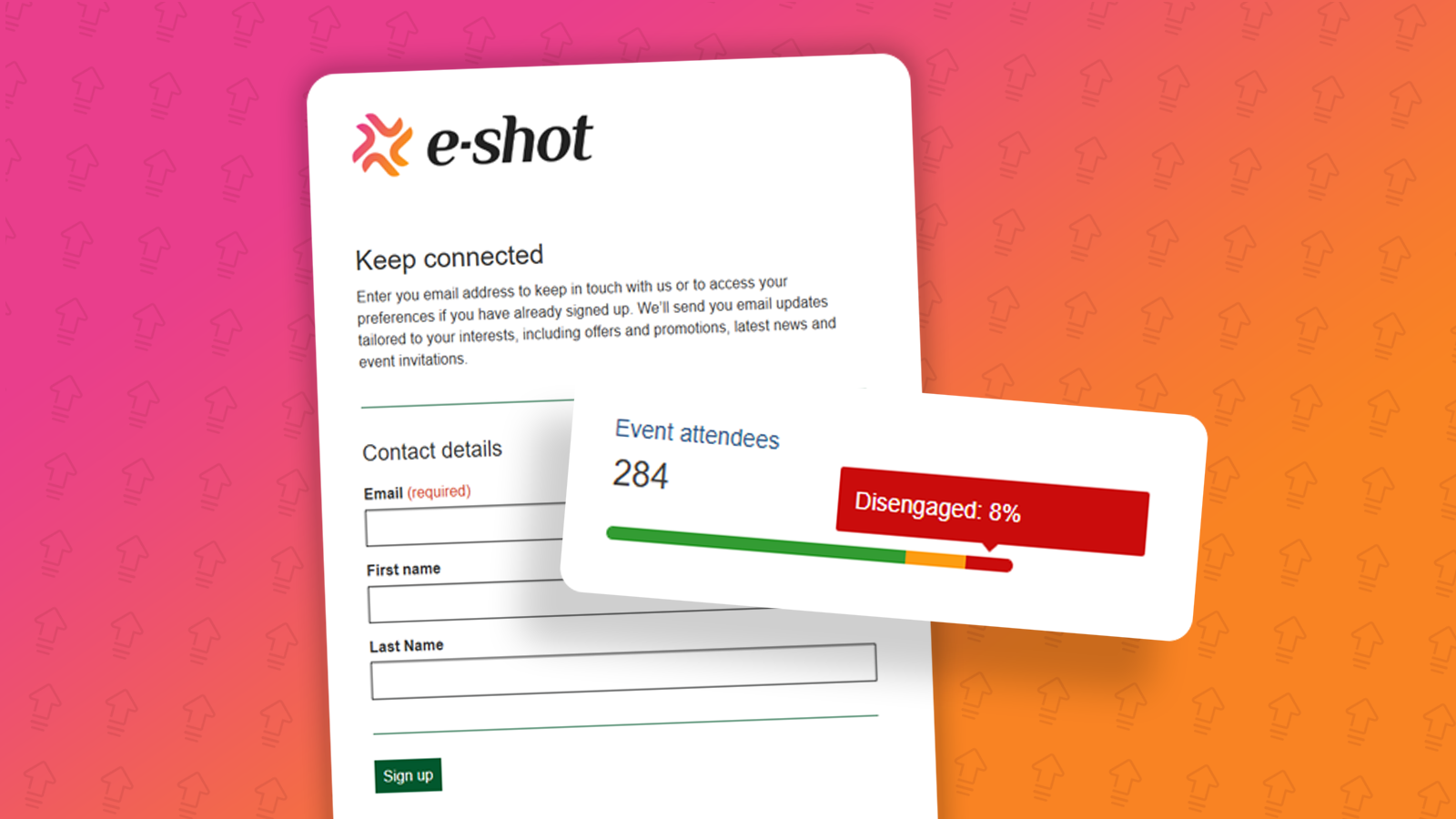
Email is one of the most powerful owned channels, but only when people actually read and engage with your emails. High unsubscribe rates, low open rates, and declining clicks are all signs of disengagement. The good news? Disengagement is fixable.
In this blog, we’ll break down why subscribers disengage and share practical, proven strategies to re-engage your audience and grow a healthier subscriber list.
We’ll also cover some top tips on how to increase your subscriber numbers, to bring in new contacts and keep your database healthy and up to date.
Why email disengagement happens
Before fixing the problem, it’s important to understand what disengagement is.
Disengagement simply put is when a contact is not interacting (opening or clicking) on your emails for an extended period. In e-shot we determine a contact fully disengaged with no engagement for 6 months. A contact begins to slip away after 3 months of no engagement.
Common causes of email disengagement include:
Irrelevant content that doesn’t match subscriber interests
Too many emails, leading to inbox fatigue
Misleading subject lines that hurt trust
Poor mobile experience
Lack of personalisation
No clear value in each email
When subscribers feel your emails no longer serve them, they stop opening or even unsubscribe altogether.
Top ways to help decrease your disengaged contacts
Improve your subject lines and preview text (without clickbait)
Your subject line is the first impression. Avoid misleading subjects that damage trust or boring ones that spark no interest.
Best practices:
Keep it concise (30–50 characters)
Spark curiosity, not confusion
Highlight a clear benefit or key article
Test personalisation (first name, location, behaviour)
Example:
❌ “You won’t believe this deal!!!”
✅ “3 ways to save time on your next project”
❌ “February 2025 newsletter”
✅ “Top places to visit in Surrey this Valentines ❤️”
Send the right amount of emails
Over-emailing is one of the fastest ways to lose subscribers. Further to this, not emailing enough can also lead to contacts becoming disengaged naturally.
How to find the sweet spot:
Monitor unsubscribe and spam complaint rates
Ask subscribers how often they want to hear from you
Send on a repeating schedule (weekly or monthly) depending on the amount of content you have.
Pro tip: Fewer, higher-quality emails often outperform frequent low-value ones.
Ensure your emails are optimised for mobile
For most audiences nowadays around 50% of emails are opened on mobile devices. If your emails aren’t mobile-friendly, engagement will drop.
Ensure:
Short paragraphs and scannable text
Responsive design
Large, tappable buttons
A clean, readable email keeps subscribers engaged longer.
Track, Test, and Improve continuously
Reducing disengagement is an ongoing process. Track metrics such as:
Open rate
Click-through rate
Unsubscribe rate
Spam complaints
Run A/B tests on:
Subject lines
Send times
Content formats
CTAs
Small improvements compound over time will always make a difference.
Regularly clean your email list and run disengagement campaigns
A smaller, engaged list outperforms a large, inactive one.
Best practices:
Run win-back campaigns for disengaged users every 3-6 months – Ask if they are still interested in your emails.
For the contacts you don't hear back from, either unsubscribe them or temporarily remove them from your sends. They can always resubscribe if interested sparks again.
Provide a clear set of preferences for contacts to subscribe to through the preference centre. This leads to less unsubscribes and provides your contacts with more options to receive different emails if they lose interest in something else.
Overall, sending to more active engaged contacts helps to improve deliverability and ensures your emails reach inboxes, not spam folders.
Top ways to help increase subscriber numbers
Optimise your sign-up forms and landing pages
Even great emails fail with poor execution.
Tips to improve conversion:
Keep forms short (name + email is often enough)
Use clear headlines and benefit-driven copy
Remove distractions on landing pages
Ensure it is clear what the contact is signing up to
Spread your bets. In some cases, providing several subscriber topics (preferences) can help to convert.
Use popups (smartly)
Our website popups tool proves extremely beneficial for gaining new subscribers. But only when done right.
Effective pop-up strategies:
Time-delayed pop-ups ensure the reader is active
Mobile-optimised designs
Show different popups on different website pages e.g., on the homepage show your main/master form but on the waste and recycling page show a dedicated form for waste and recycling news.
Avoid aggressive tactics. A helpful, well-timed popup feels like assistance, not interruption.
Learn more about e-shot website popups here.
Promote your sign-up form everywhere!
Don’t limit signup forms to one page on your website or one stream of content.
Places to promote subscriptions:
Website header or footer
About page
Social media bios
YouTube descriptions
Email signatures
Printed material
Consistency increases visibility—and signups.
Top tip: Sign up forms provide you with a unique QR code, upon scanning this takes you directly to fill in the form. Use this QR code in printed materials or display it in popular areas such as a library or a bus stop.
Conclusion
That's all for our top tips on reducing disengagement and increasing subscribers. Making small changes over time can really make a difference to your email campaigns.
If you have any questions or would like further guidance, please feel free to contact us via the live chat where our team are always happy to assist.
You may also like these articles
help-articles Forms and Landing Pages
Forms: Sign-up forms
January 19th, 2022 - Sadie Burgess
To grow your subscriber base, you need somewhere that new subscribers can sign up. To manage your forms, go to the forms section in the main menu...
Forms and Landing Pages
Full setup: Website popups
July 1st, 2025 - Harry Thomas
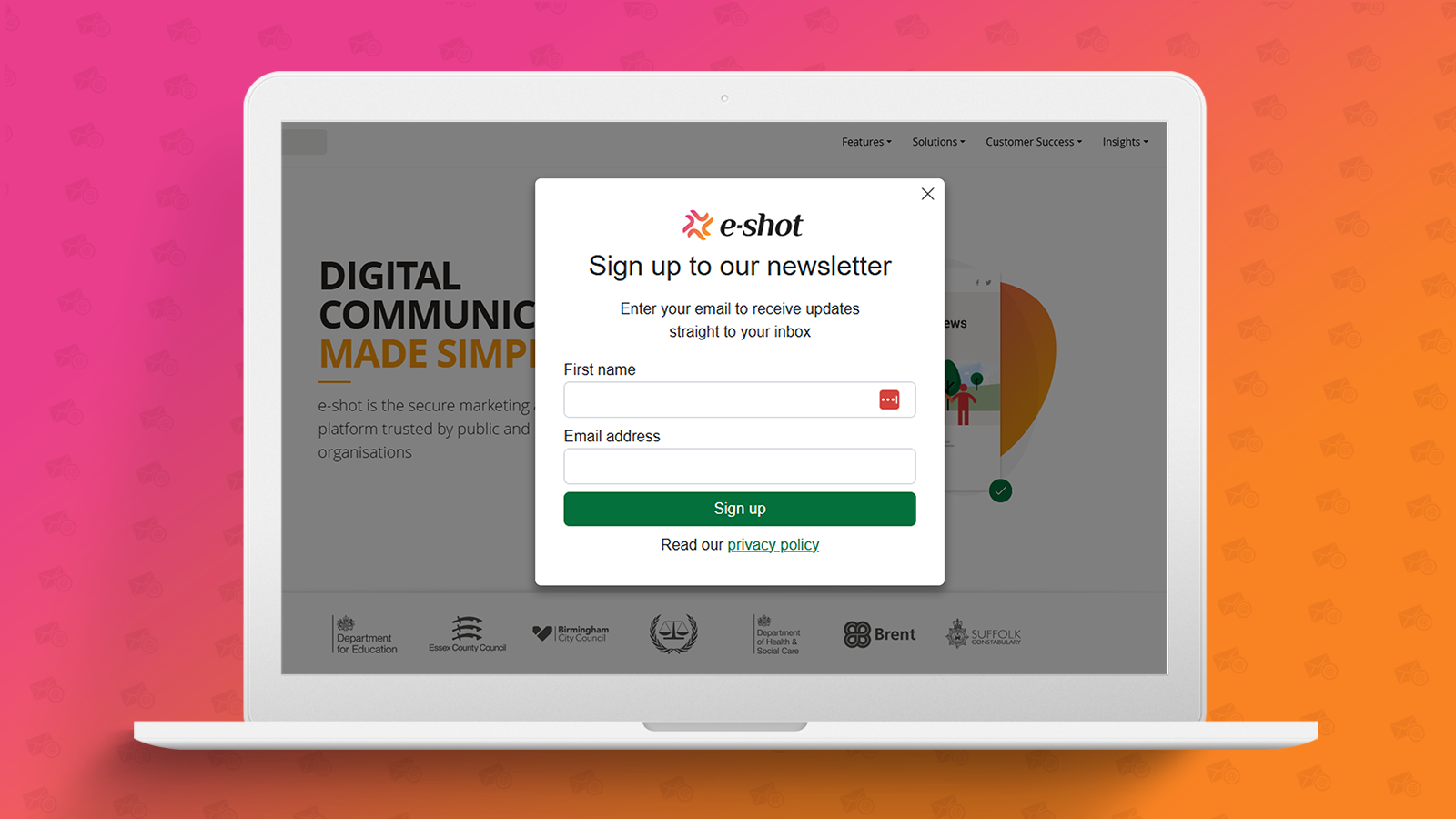
In this help document, we will run through the process of creating a pop-up form which can be placed on your website. A couple of use cases for...
email-marketing
Are you thinking mobile first?
July 19th, 2022 - Harry Thomas
As marketers the term ‘Mobile first’ is often thrown around. Mobile first, put simply refers to the process of designing an online experience for...
Solutions

Email Marketing
Create email campaigns and newsletters and manage end-to-end subscription processes with forms and preferences.

Marketing Automation
Create sophisticated automated campaigns for email and SMS combined.

Digital Communication
The comprehensive solution to manage and automate your digital communication across email, SMS, websites and landing pages.

Email marketing healthcheck
We are confident that we can help you, which is why we offer a free healthcheck to identify potential issues with your current programme and free advice on things that could be done to improve it.