Help articles
CATEGORY: CRM
CRM - Groups List

Groups are one way how your contacts are organised within the platform. They act as your audience lists, used when sending campaigns, setting up sign-up forms, and managing preferences across email and SMS. A contact can belong to multiple groups at the same time, and groups can be as broad or as specific as you need them to be.
Preferences is the other way contacts are organised within the platform. To explain the difference simply.
A group is a list managed and maintained by the e-shot users. For example, an internal staff list or attendees to a particular event.
A preference is a list managed and maintained by the contacts themselves via forms and preference centres, the contact can pick and choose which preferences or lists they want to receive emails for. For example, your main weekly newsletter, upcoming events, library news and so on.
The Groups List page gives you a central view of all groups within your account. From here you can search for and find existing groups, see how many contacts are in each one, create new groups, edit existing ones, and manage them using a range of built-in tools.
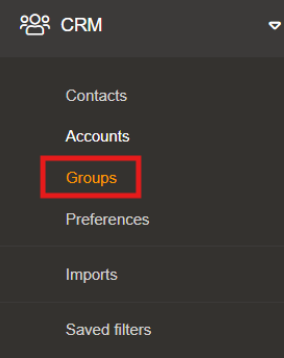
To access the Groups page, visit CRM > Groups.
Searching and filtering
A search bar at the top of the page lets you quickly locate a group by name. You can also filter the list using the filter icon in any column header, select your operator and value, then click Filter to update the results.
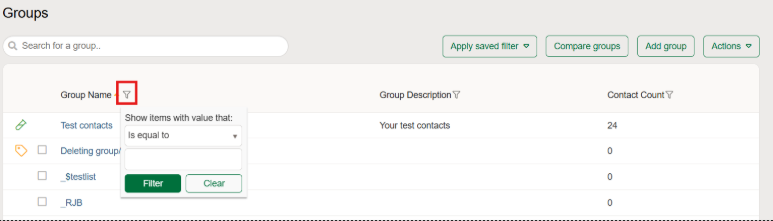
To remove any applied filters, click Clear All Filters, which will be greyed out if no filters are currently active.
Featured groups
Groups can be marked as Featured when creating or editing them.
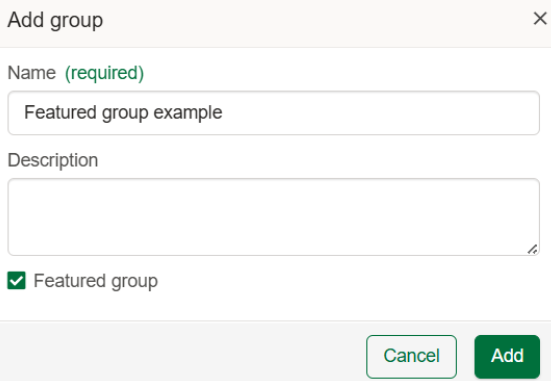
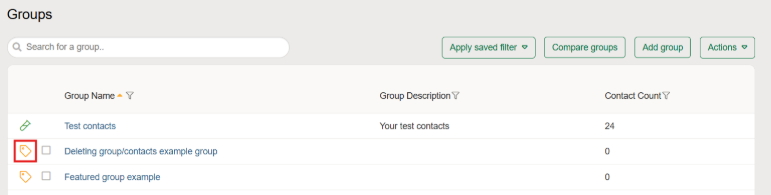
Featured groups are pinned to the top of the list and display a featured icon on their row, making your most-used groups easy to find at a glance.
Compare groups
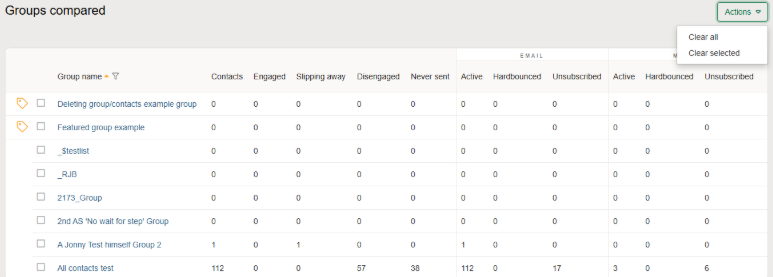
The number of contacts in each group is displayed on the Groups List page. To see a more detailed breakdown, including engagement categories for email and SMS statuses, use the Compare Groups function.
Tick the checkbox next to up to 10 groups, then click Compare Groups to display the breakdown at the bottom of the page.
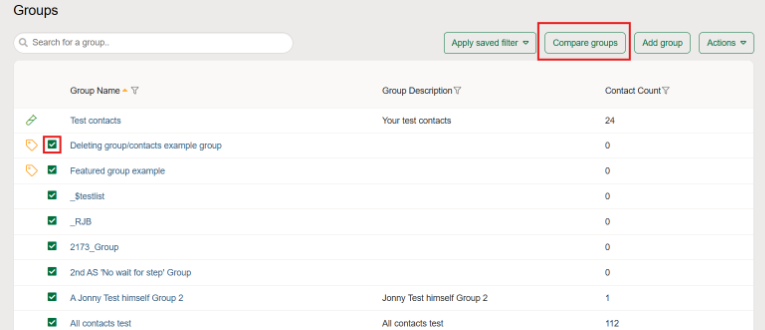
You can add further groups to the comparison by ticking additional checkboxes and clicking Compare Groups again. To reset the selection and hide the comparison panel, click the cross next to the Compare Groups button.
Adding a Group
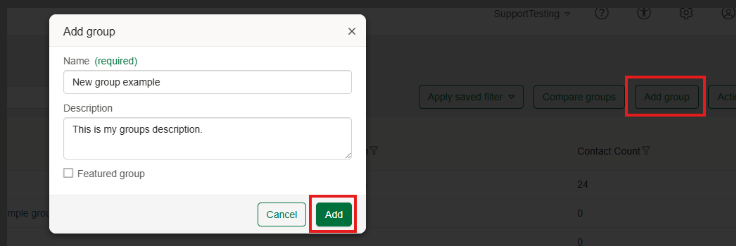
Click the Add Group button to open the new group panel. Enter a name for your group, optionally add a description, and choose whether to mark it as Featured. Click Add to save the new group.
Actions
The Actions button provides options for managing one or more selected groups. To select a group, tick the checkbox on its row. To select all groups across all pages, tick the checkbox in the column header.
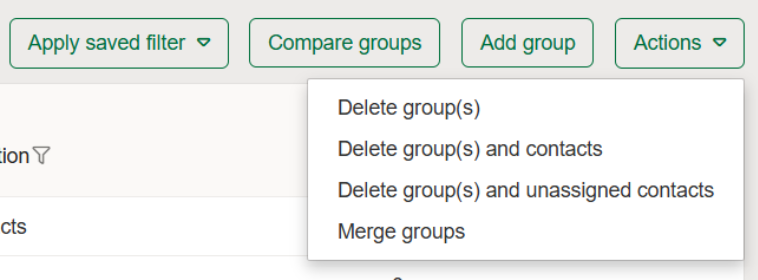
Delete group(s): Removes the selected group or groups but keeps all contacts within the CRM and any other groups they are a part of
Delete group(s) and contacts: Deletes not only the selected groups but also deletes ALL of the contacts within those groups.
Delete group(s) and unassigned contacts: Deletes the selected groups along with any unassigned contacts. An unassigned contact is definded by a contact that will no longer be in any other groups once the selected one has been deleted.
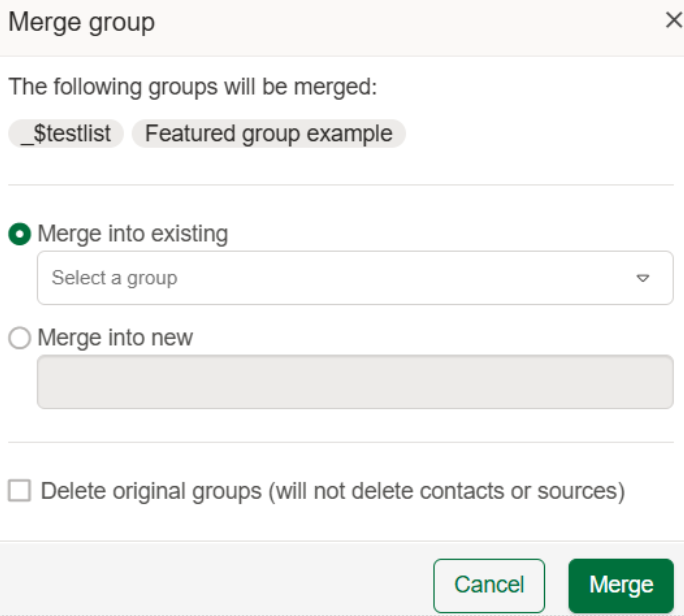
Merge groups: Combines two or more groups into a single group, either an existing one or a newly created one. You can choose whether to delete the original groups after merging. If you do, the contacts within them will not be deleted — they will simply be moved into the merged group.
Paging
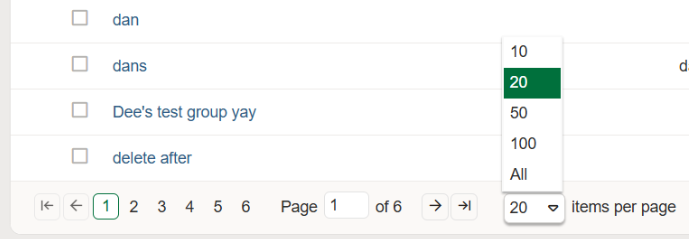
You can control how many rows are displayed in the groups grid by selecting 10, 20, 50, or 100 rows per page. This preference is saved to your user profile and will apply across other CRM pages too.
You may also like these articles
CRM
CRM - Contacts List
January 30th, 2020 - Sadie Burgess
The Contacts page is accessible from the CRM section of the sidebar and shows a grid of all contacts within the subaccount, along with your chosen...
CRM
CRM - Engagement Categories
October 30th, 2019 - Harry Thomas
With e-shot you can keep a close eye on the health of your contact data simply and efficiently. Using the CRM dashboard, you are able to see at a...
CRM
CRM - Contact View
January 30th, 2020 - Harry Thomas
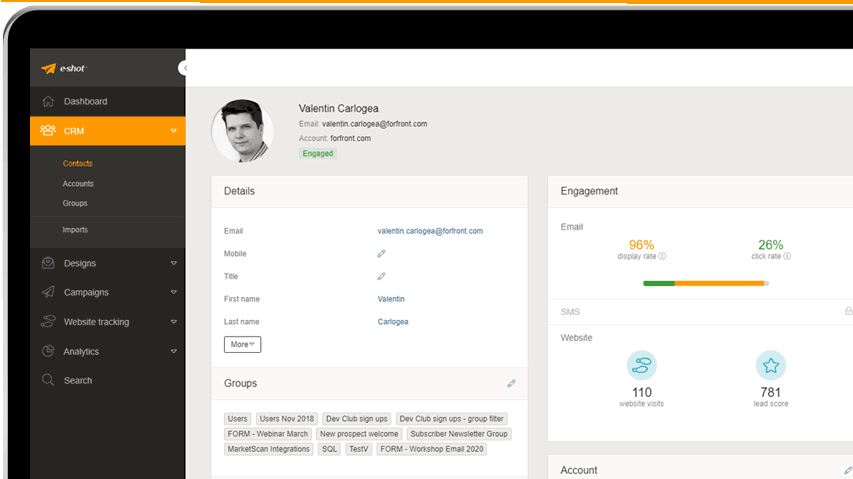
Contacts View From various areas around e-shot, in particular the CRM > Contacts page or whilst inside of a group or preference, clicking on any...
Solutions

Email Marketing
Create email campaigns and newsletters and manage end-to-end subscription processes with forms and preferences.

Marketing Automation
Create sophisticated automated campaigns for email and SMS combined.

Digital Communication
The comprehensive solution to manage and automate your digital communication across email, SMS, websites and landing pages.

Email marketing healthcheck
We are confident that we can help you, which is why we offer a free healthcheck to identify potential issues with your current programme and free advice on things that could be done to improve it.