Blog
CATEGORY: Public SectorEvent
Could you just?

I had the privilege of presenting at both FirePRO in Birmingham and LGcomms Academy in Wigan this month. Both events delivered a superb selection of content and speakers along with highly engaging unconference sessions. It was also fantastic to see packed venues at both events with plenty of junior staff being given the opportunity to learn from their industry peers. Perhaps we have finally got past the post-pandemic preference to online events…
For the LGcomms event, we also brought a DeLorean to reflect the “Back to the Future” theme of the conference, which proved to be a real hit with those who attended.
Aside from the excitement of the DeLorean and my first experience of Northern Soul dancing, the events offered a useful insight into the challenges faced by public sector comms professionals. The cited issues were similar at both events and ring true with what I have heard repeatedly from customers throughout the year:
Workload pressures
Internal communications challenges
Budget pressures
There is a correlation between these three challenges and the pressures are not unique to communications teams, hence staff being ‘too busy’ to engage with internal communications. In this series of posts, I will offer some tips for addressing each of these issues. We will start with workload pressures…
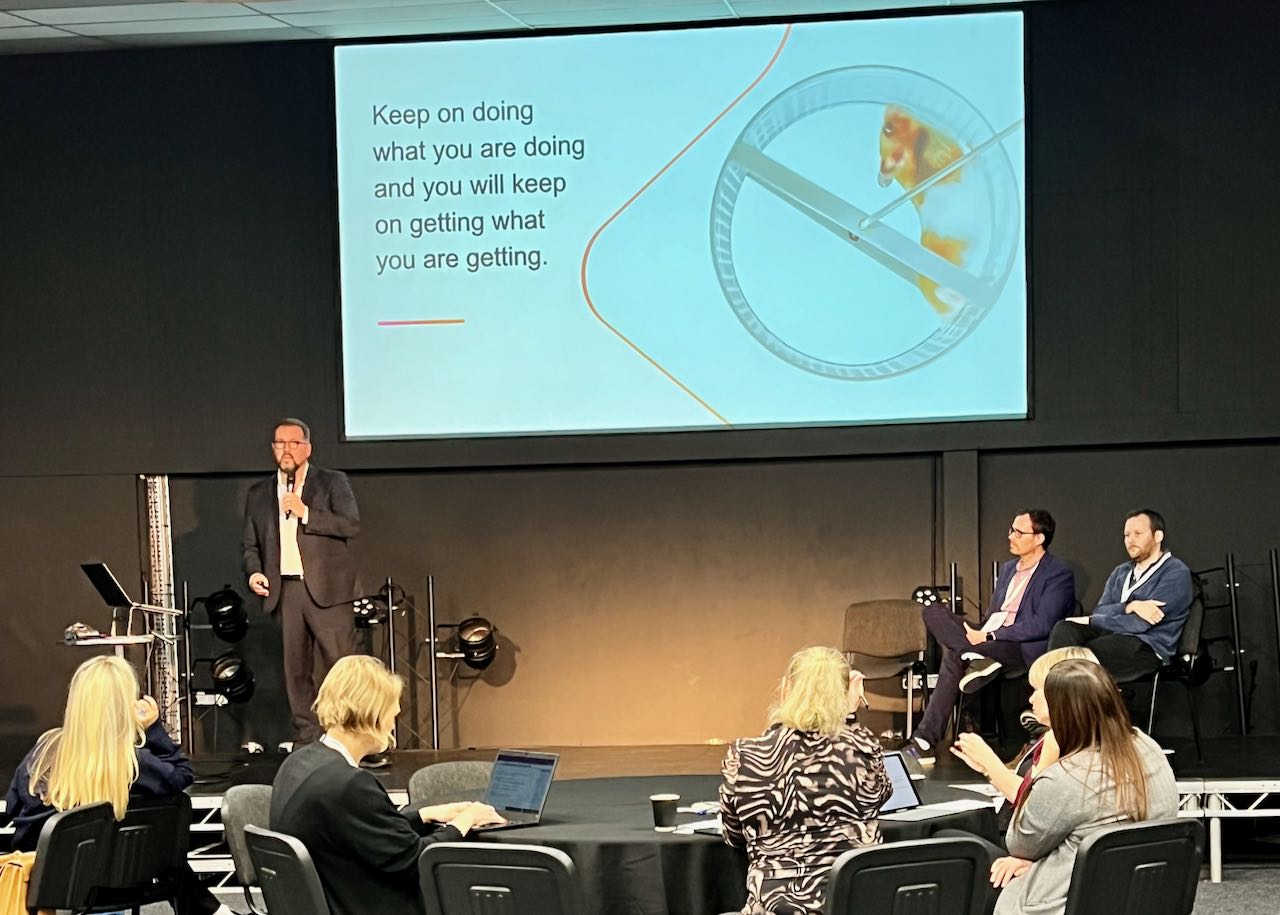
My sense is that increased budgets and more staff are not likely to become a reality any time soon. In the perennial absence of a silver bullet, what high impact, low complexity things could we do to address workload pressures?
“Could you just?”
When was the last time you were able to get IT to take on a project by sending them a quick note in Teams. When was the last time your legal team just threw together a contract for you after a quick chat?
Other teams just do not operate this way, but it is often the standard way to brief comms. We are often reactive because that is what the organisation demands of us as a function – when something happens, comms are there to deal with it. However, that is not to say that planning, process and procedure is unnecessary.
In my experience, the most effective teams have a structure that accommodates the curve balls without compromising on the important, strategic work – separating what is urgent from what is important and allocating capacity to both.
That does not magically solve capacity issues, but it does put a limit on how much time and resource there is for things that do not align with the strategy.
In my LGcomms workshop, I ran an exercise asking the audience to first write down their strategic communications objectives and then to write down their communications team activities.
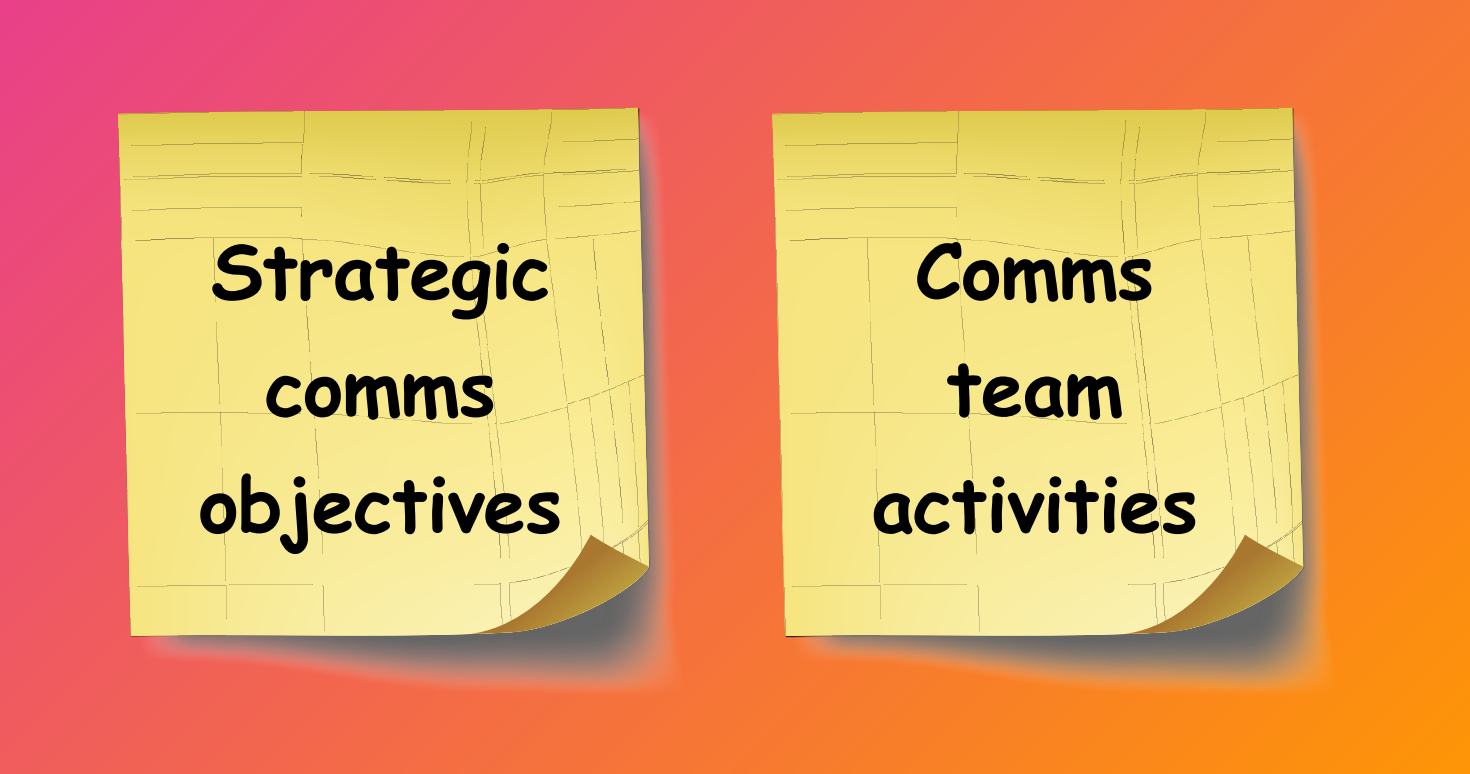
Nobody had more than 5 strategic objectives.
Everybody had more than 10 things their team did.
Doing something about not doing the non-strategic work is pivotal.
“Brief me properly”
Consider ways to ensure that the work your team undertake is planned and aligned with the strategic objectives. Refusing work that is not strategic can be challenging, but there are ways to minimise the amount of ‘noise’ you receive.
A robust process for briefing work is essential to cut down on the ‘could you just’ requests. I have used the same model for 20 years:
What is the objective?
How does that align with the organisation strategy?
Who is the target audience?
What do they currently think and do?
What do we want them to think and do?
How will we measure success?
Past these questions, it tends to be best to then consult on messaging and mediums, but sending people off to answer these six things first does two things:
It helps them to brief you better and get a better output from you
It helps you to deflect work that has not been thought through or is not really necessary
It is not a major problem if people disappear with your briefing form to never be heard from again!?
“By when?”
Hot potato syndrome tends to lead to artificial deadlines. Having a proper brief also helps you to get a true sense of what is required and what is then possible. It also helps to prioritise work based on the real-world objective and not just who shouts loudest.
The Eisenhower Matrix then offers the simplest form of prioritisation I know:
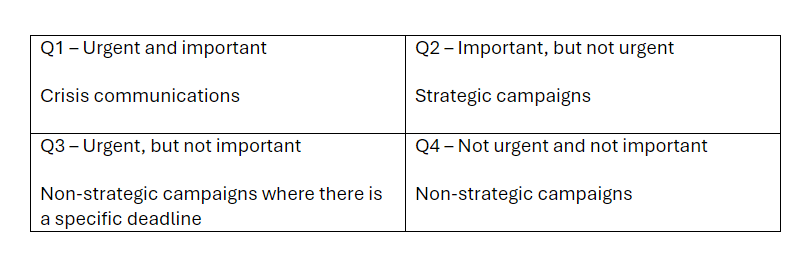
The trick here is that Q2 takes precedence over Q3: “ I can help you with that completely off-piste project as soon as I complete this important milestone for my strategically important campaign.”
It is not that you cannot do the work, it just has to wait.
“Measurement”
You cannot improve what you cannot measure and ensuring there are mechanisms in place to assess whether a campaign fulfils its objectives also helps to ensure that the work you do is recognised. If we’re just busy producing stuff, with no thought to review, how can we improve? What worked well? What could be even better?
“Professional communications”
Communications deserves the recognition as a professional function as much as any team. The pandemic showed just how incredibly versatile we can be, but that time of crisis has passed, and we now have to return to some form of normal service to be effective.
Having the support and buy-in of what you’re doing from your senior leadership team is pivotal to achieving this and that is something we will explore in the next piece about Internal Communications.
In conclusion, both FirePRO and LGcomms Academy were inspiring events that showcased the evolving landscape of public sector communications. It was great to see an engaged audience, eager to learn and adapt to the challenges we all face in this field. As we continue to navigate the pressures of increasing workloads, strained budgets, and the complexities of internal communications, it’s clear that a more strategic approach is crucial. By focusing on prioritisation, proper briefing, and outcome-based measurement, we can create a more effective and respected communications function. In the next post, I’ll explore how internal communications can play a pivotal role in gaining the support we need from leadership.
You may also like these blogs
.jpg)
Back from the future of local government communications
October 17th, 2024 -
Pictured from left to right: Andy Allsopp from Essex County Council, Lisa Nandy, Secretary of State for Culture, Media and Sport, Danni Clayton...
Solutions
Email Marketing
Create email campaigns and newsletters and manage end-to-end subscription processes with forms and preferences.

Marketing Automation
Create sophisticated automated campaigns for email and SMS combined.

Digital Communication
The comprehensive solution to manage and automate your digital communication across email, SMS, websites and landing pages.

Email marketing healthcheck
We are confident that we can help you, which is why we offer a free healthcheck to identify potential issues with your current programme and free advice on things that could be done to improve it.